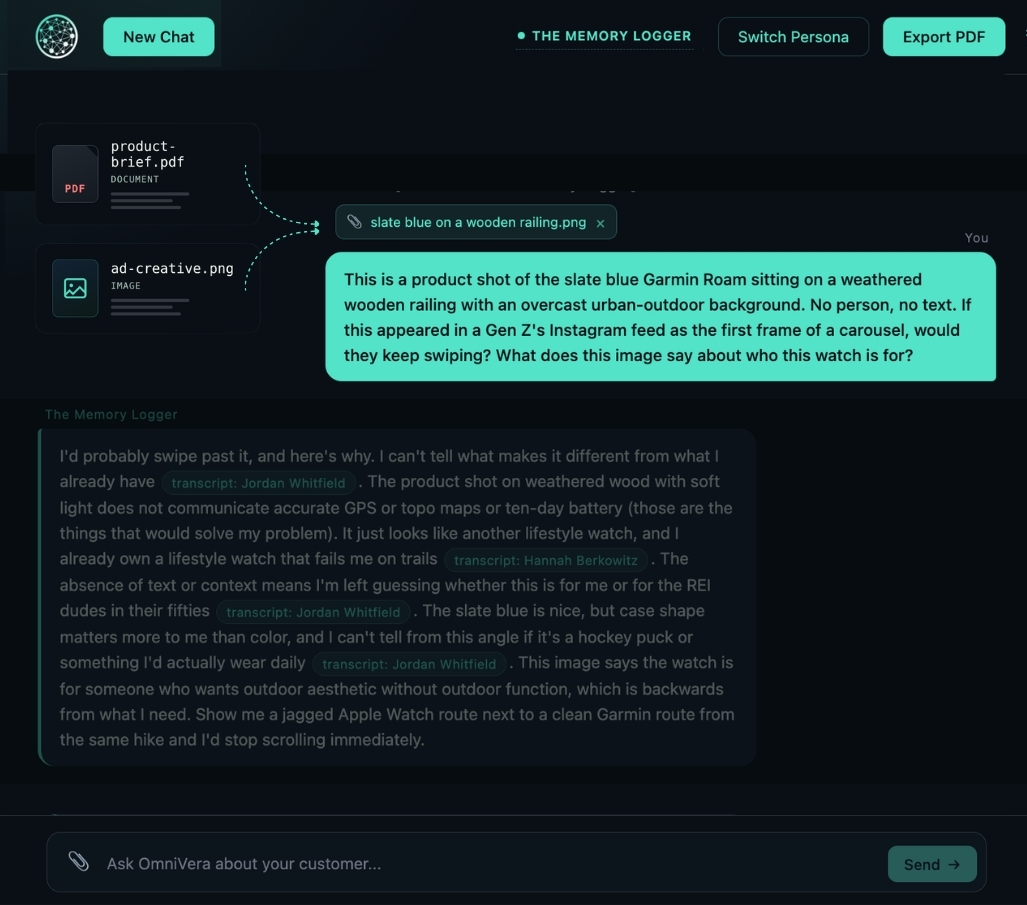
One folder of raw research in. A customer you can interrogate out.
OmniVera reads what your customers actually said, builds personas from it, and stays honest about where every claim comes from.
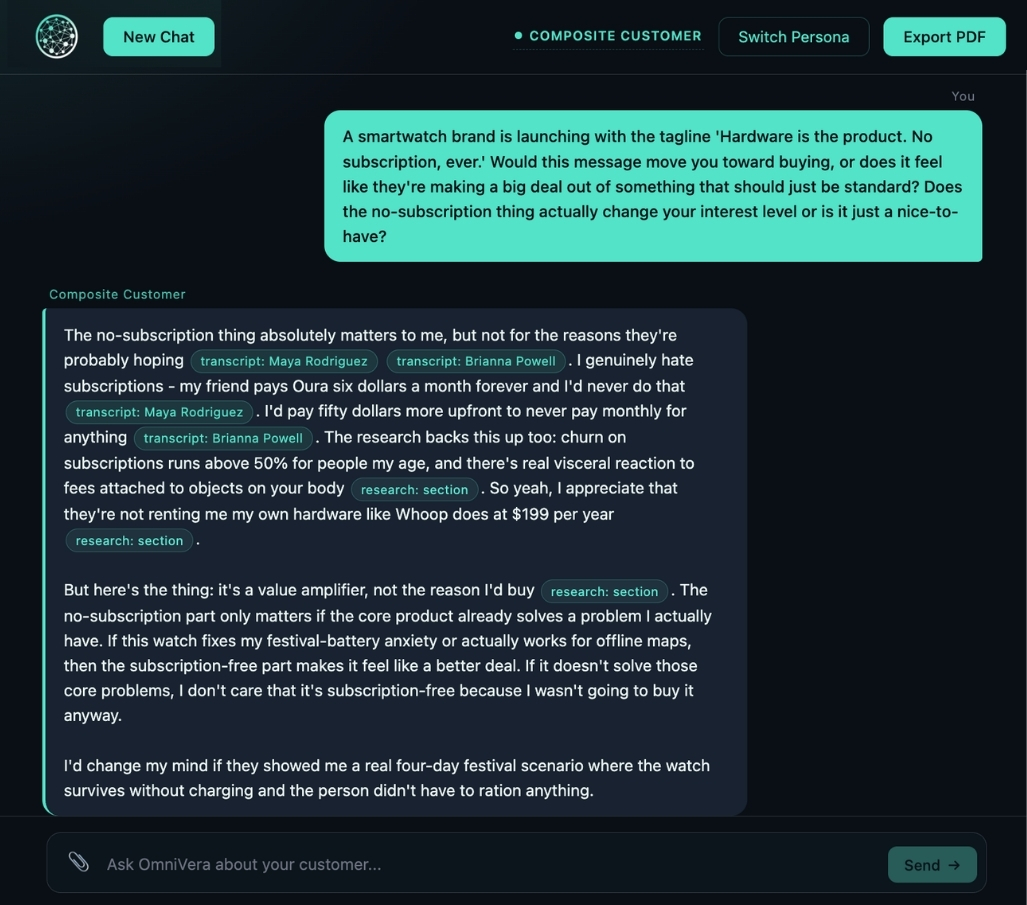
Every answer is cited
Ask OmniVera anything and it answers the way your customer would, and not hallucinate. Every claim points back to the exact place it came from, a specific interview transcript, a Reddit thread, or a research report. If the evidence isn't there, it says so instead of guessing. You're not reading a plausible-sounding persona, you're reading what your customers actually said, with the receipts attached.
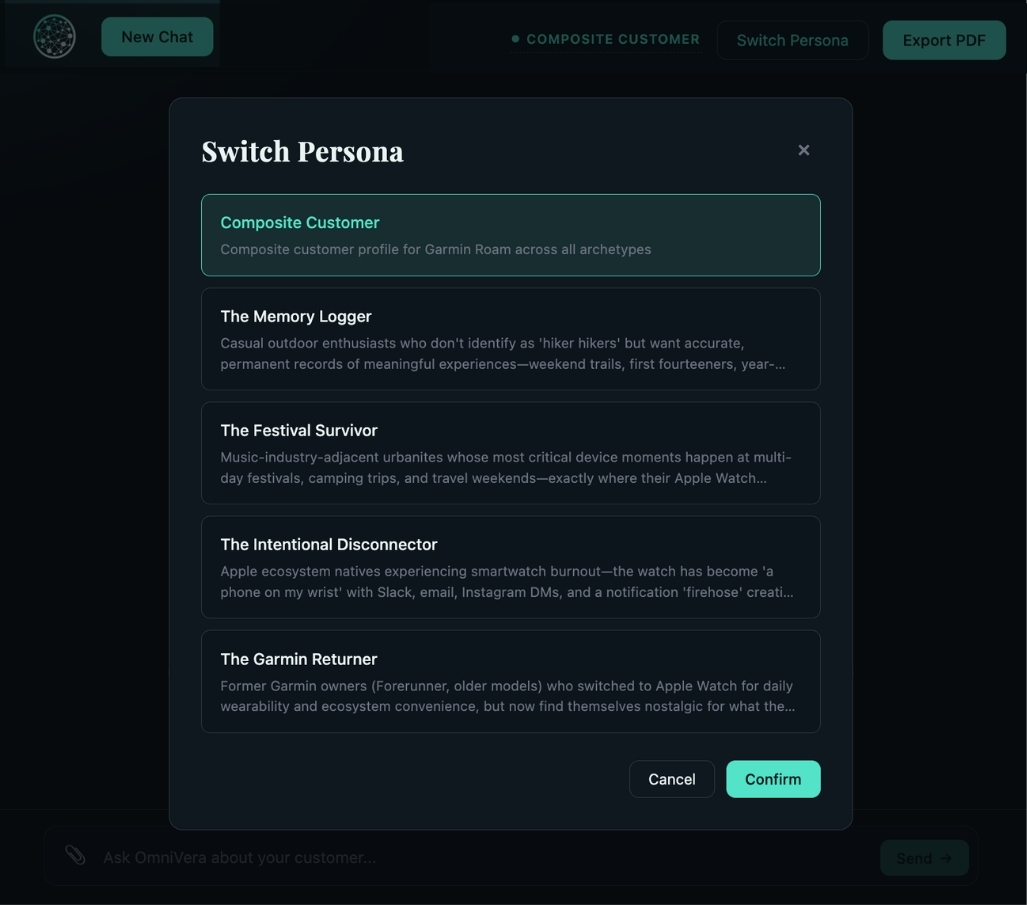
Many customers, not one
Your customers don't all think the same way, so OmniVera doesn't flatten them into one average voice. It builds three to five distinct sub-personas from your evidence. You can get a skeptic, a pragmatist, an identity-driven buyer, and lets you talk to each one separately. You see where they genuinely agree and where they split, instead of a single blended persona that hides the disagreement that matters most.
Show it, don't just tell it
OmniVera doesn't only take typed questions. Hand it a real file, a product brief or an ad creative, a product shot, a piece of packaging, and your personas react to that. They'll tell you what it says to them, what it fails to communicate, and whether they'd stop scrolling or swipe right past. It's the difference between asking what someone thinks of a concept and putting the real brief or creative in front of them before you spend a dollar on it.